Opposing Optimization: Returning to the Intelligence of Land. Life integration
There was a time before metrics defined meaning.
Before output determined worth.
Before time was carved into units to be spent, saved, or optimized.
In older worlds, life moved differently.
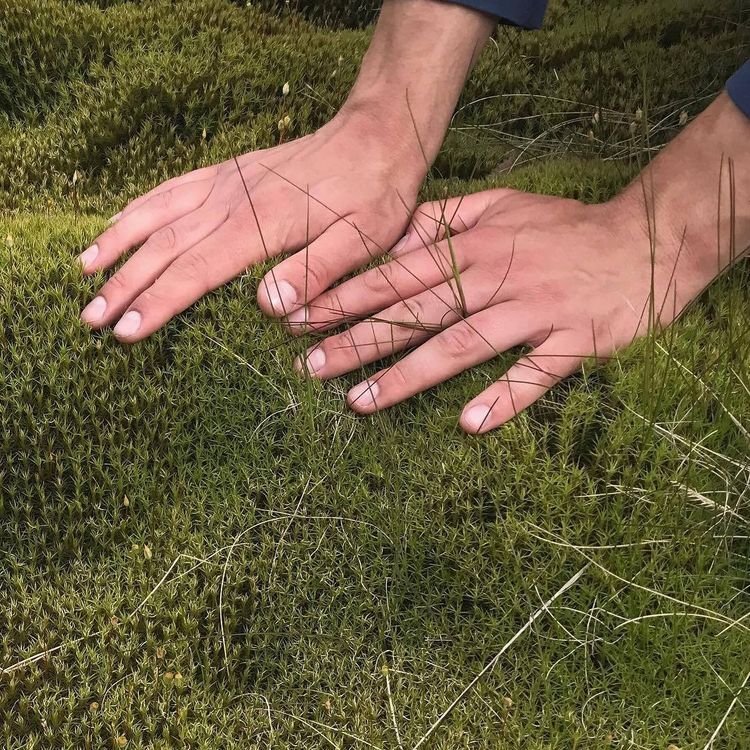
Agriculture followed the rhythms of the earth, not the demands of a clock. Days were shaped by light and season. The body was not something to override, but something to listen to. Across cultures, there existed an understanding that life was not meant to be maximized, but harmonized. In traditions spanning from Traditional Chinese Medicine to Ayurveda, well-being was never reduced to output. It was a relationship. Between body and earth. Between energy and rest. Between effort and surrender.
This was not inefficiency.
It was intelligence of a different kind.
A sacred intelligence.
One that understood that not everything valuable can be measured.
And not everything measurable is valuable.
Then something shifted.
With the rise of industrialization, factories replaced farms. Time became standardized. Hours became units of production. Human life, once cyclical and responsive, became linear and scheduled. The body was asked to keep up with machines rather than move with nature.
By the mid-20th century, particularly around the era of World War II, a new philosophy took hold. Optimization entered the cultural vocabulary. Systems were designed to maximize output with minimal input. Efficiency became not just a strategy, but an ideal.
“If something can be measured, it can be improved.
If it can be improved, it should be.”
At first, this thinking built extraordinary things. It scaled industries. It streamlined processes. It transformed the modern world.
But quietly, it also began to reshape how we see ourselves.
Optimization moved from factories into daily life. It became a lens through which we measured our worth.
More productive meant more valuable.
More efficient meant more successful.
More optimized meant closer to “enough.”
And so, a subtle hierarchy emerged. Speed over depth. Growth over sustainability. Productivity over presence.
Yet life does not behave like a machine.
It is not linear.
It is not predictable.
It is not fully quantifiable.
There are things that resist measurement by nature. A moment of connection. The feeling of being nourished. The quiet clarity that arises when you slow down enough to hear yourself again.
Still, we try to quantify them.
We count steps and forget the pleasure of walking.
We track sleep and lose the ease of rest.
We measure performance and begin to feel like we are always falling short.
In this framework, optimization becomes more than a tool. It becomes a moral code. One that quietly suggests that if you are not improving, you are failing.
But what if that premise is incomplete?
What if the deeper question is not how to optimize life, but how to be in relationship with it?
At Copalun, we return to a different orientation.
One rooted in SOMA, the body’s innate intelligence.
And K’UX, the heart’s deeper knowing.
These are not systems to optimize.
They are intelligences to trust.
The body already understands rhythm. It knows when to move and when to rest. It knows how to digest, repair, and recalibrate. The heart carries memory, intuition, and meaning that cannot be reduced to data points.
When we override these systems in pursuit of constant improvement, something essential begins to flatten. The human experience becomes mechanical. Refined, perhaps. Efficient, certainly. But often disconnected.
So the question is not whether optimization is inherently wrong.
It is whether it has been applied too broadly.
Whether a framework designed for machines has been mistaken for a philosophy of living.
Because if the pursuit of perfection comes at the cost of spontaneity, creativity, or joy, then we are left with a quiet question:
What exactly are we optimizing for?
There is another way.
Not regression, but remembrance.
A return to cycles instead of straight lines.
To nourishment instead of output.
To presence instead of performance.
This is not about rejecting progress. It is about restoring balance.
At Copalun, we see nourishment as a daily ritual of return. Not to a better version of yourself, but to a more connected one.
To the body.
To the earth.
To the intelligence that has always been there, beneath the noise.
Beyond optimization, there is something quieter.
Something older.
Something whole.
And it is still available.